
GovCon Strategy · June 2025
Are GovCons Measuring the Wrong Thing?
Most contractors measure pipeline growth. Few measure pursuit waste.
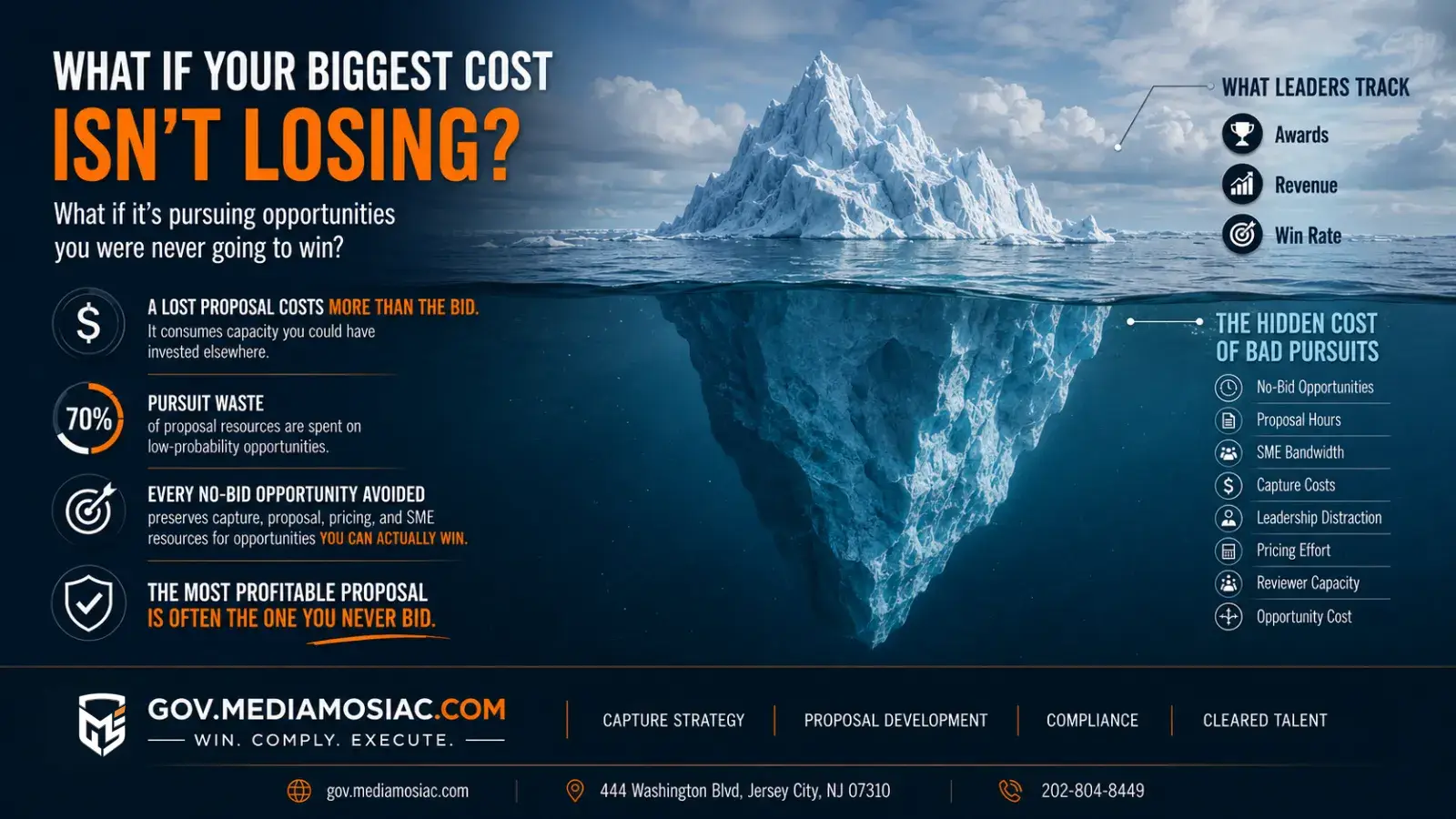
One metric we rarely see discussed in GovCon: Pursuit Waste. Not proposal costs. Not pipeline value. Not win rates. The amount of time, effort, and resources spent on opportunities that never had a realistic path to an award. At first, that may sound harsh. But we think it’s a conversation worth having.
The Metric Nobody Talks About
Most contractors proudly track:
- Number of opportunities identified
- Total pipeline value
- Number of proposals submitted
- Contract awards won
All important metrics. But here’s the question:
How many opportunities should we have never pursued in the first place?
We rarely see that measured. Yet it may be one of the most expensive blind spots in GovCon.
What Federal Award Data Continues to Show
If you spend enough time reviewing federal award data, certain patterns become difficult to ignore. A significant share of contract dollars continues to flow toward:
- Incumbent contractors
- Companies with relevant past performance
- Firms with established agency relationships
- Teams that began positioning well before the solicitation was released
Sources:
This doesn’t mean new entrants can’t win. They absolutely can. But it does raise an important question:
The Cost Nobody Calculates
Imagine a company pursuing 40 opportunities in a year. Now imagine only 10 of those opportunities had a realistic path to an award. What was the actual cost of the other 30 pursuits?
Not just proposal expenses. We’re talking about:
- SME bandwidth
- Capture resources
- Leadership attention
- Pricing effort
- Reviewer capacity
- Opportunity cost
Most organisations calculate bid costs. Very few calculate distraction costs.
Why This Matters More Today
The federal market is becoming increasingly competitive. Many contractors are simultaneously navigating:
- OASIS+ task-order opportunities
- Acquisition reform discussions
- Increased proposal volumes
- Resource constraints
- More competition across contract vehicles
At the same time, proposal and capture teams are being asked to do more with the same resources. That makes prioritisation more important than ever.
A Different Way to Look at Growth
Most companies ask: “How many opportunities are in our pipeline?”
What if we also asked:
“How many opportunities did we intentionally decide not to pursue, and were we right?”
We suspect that answer would reveal far more about an organisation’s growth strategy than pipeline value alone.
Our Take
We don’t think most GovCons have an opportunity problem. We think many have a prioritisation problem.
The firms that grow sustainably over the next few years may not be the ones pursuing the most opportunities. They may be the ones making the best decisions about where not to spend their resources.
Because sometimes the most strategic bid decision isn’t a bid. It’s a no-bid.
How does your organisation evaluate whether an opportunity truly has a path to win before investing proposal resources?