
Federal IT Trends · June 2026
Trend Worth Watching: The Next Federal IT Opportunity May Not Be Software
Agencies have spent years modernising systems. Now comes the harder challenge: making them work together.
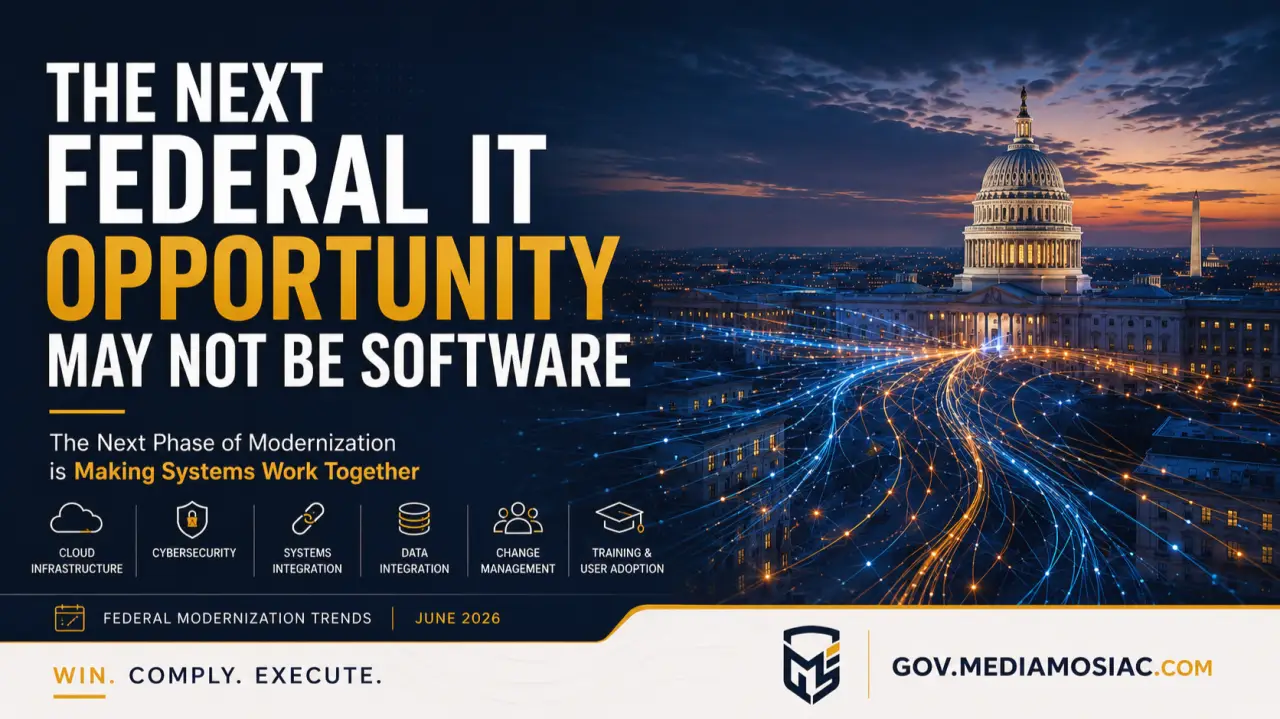
For years, federal agencies invested billions in modernisation: new platforms, cloud migrations, digital transformation initiatives, system replacements. But a new challenge is emerging: how do you make all those systems work together?
That’s why a recent development at the Department of Veterans Affairs (VA) caught our attention. The VA has resumed deployments of its Federal Electronic Health Record (EHR) system and plans to expand implementation across additional facilities as part of its modernisation roadmap.
At first glance, this looks like a healthcare technology story. But it signals something much bigger.
Why This Matters Beyond Healthcare
When people hear “Electronic Health Records,” they often assume the opportunity is limited to healthcare software providers. But modernisation efforts of this scale require far more than software deployment. They require agencies to:
- Connect systems
- Secure sensitive data
- Share information across organisations
- Manage operational change
- Train users
- Improve adoption
In other words:
deploying technology
connecting an ecosystem
The Real Trend Worth Watching
For years, modernisation meant:
- Replace the legacy system
- Deploy the new platform
- Move to the cloud
Today, agencies are increasingly asking a different question:
How do we turn disconnected systems into connected outcomes?
According to the VA, the Federal EHR is intended to support seamless information sharing across the VA, the Department of Defense, and other federal healthcare partners.
That’s not simply a technology challenge. It’s an interoperability challenge. And interoperability is becoming one of the most important topics of conversation in Federal IT.
Where Opportunities May Emerge
This trend extends far beyond traditional Health IT contractors. Think about what’s required to support modernisation at scale:
- Cybersecurity
- Cloud Infrastructure
- Systems Integration
- Data Management
- Analytics
- Program Management
- Change Management
- Training & User Adoption
For many organisations, these capabilities may become just as important as the technology itself.
What Contractors Should Be Watching
New contractors often assume Federal Health IT opportunities are reserved for healthcare-focused firms. We don’t think that’s the case.
If your organisation supports:
You may already have the capabilities to move into the next phase of modernisation. For experienced contractors, the conversation may gradually shift from implementation toward optimisation, interoperability, security, and long-term operational success.
Our Take
We don’t think the most important question in Federal IT is:
We think it’s:
Federal agencies have spent years modernising technology. The next decade may be about integrating it. And if that’s true, the organisations that understand interoperability, security, and operational adoption may be best positioned for what’s next.
Because the next Federal IT opportunity may not be software. It may be making software work together.
What capability do you think will play the biggest role in the next phase of federal modernisation: cybersecurity, cloud, interoperability, data, or user adoption?
If you found this article valuable, consider subscribing to weekly insights on federal contracting trends, procurement developments, and emerging opportunities across the GovCon market.
Frequently Asked Questions
What is federal IT interoperability and why is it the next big opportunity?
Federal IT interoperability refers to the ability of different government systems, platforms, and agencies to share data and work together seamlessly. After years of modernization spending on individual systems, agencies now face the harder challenge of connecting those systems — creating major demand for integration, cybersecurity, data management, and change management services.
Do you need to be a healthcare IT firm to win VA EHR-related contracts?
No. While the VA EHR modernization is a healthcare initiative, it requires a broad range of non-clinical capabilities including cybersecurity, cloud infrastructure, systems integration, data management, program management, training, and user adoption. Companies in any of these areas may have relevant capabilities.
What capabilities are most in demand for federal IT modernization in 2025 and 2026?
The most in-demand capabilities for federal IT modernization include cybersecurity, cloud infrastructure, systems integration, data management, analytics, program management, change management, and training and user adoption services.